Puffer & Quilted Hoodies: Manufacturing Guide for Winter Streetwear Collections
Winter streetwear is no longer just about layering — it is about making a statement with texture, volume, and warmth. Puffer and quilted hoodies have moved from niche techwear into the mainstream of winter collections, blending the comfort of a hoodie with the insulation of outerwear. For brands planning a winter drop, understanding how these garments are manufactured — from insulation types to quilting patterns to seam construction — is the difference between a product that sells and one that sits. This guide walks you through everything you need to know.
1. What Makes a Puffer or Quilted Hoodie Different?
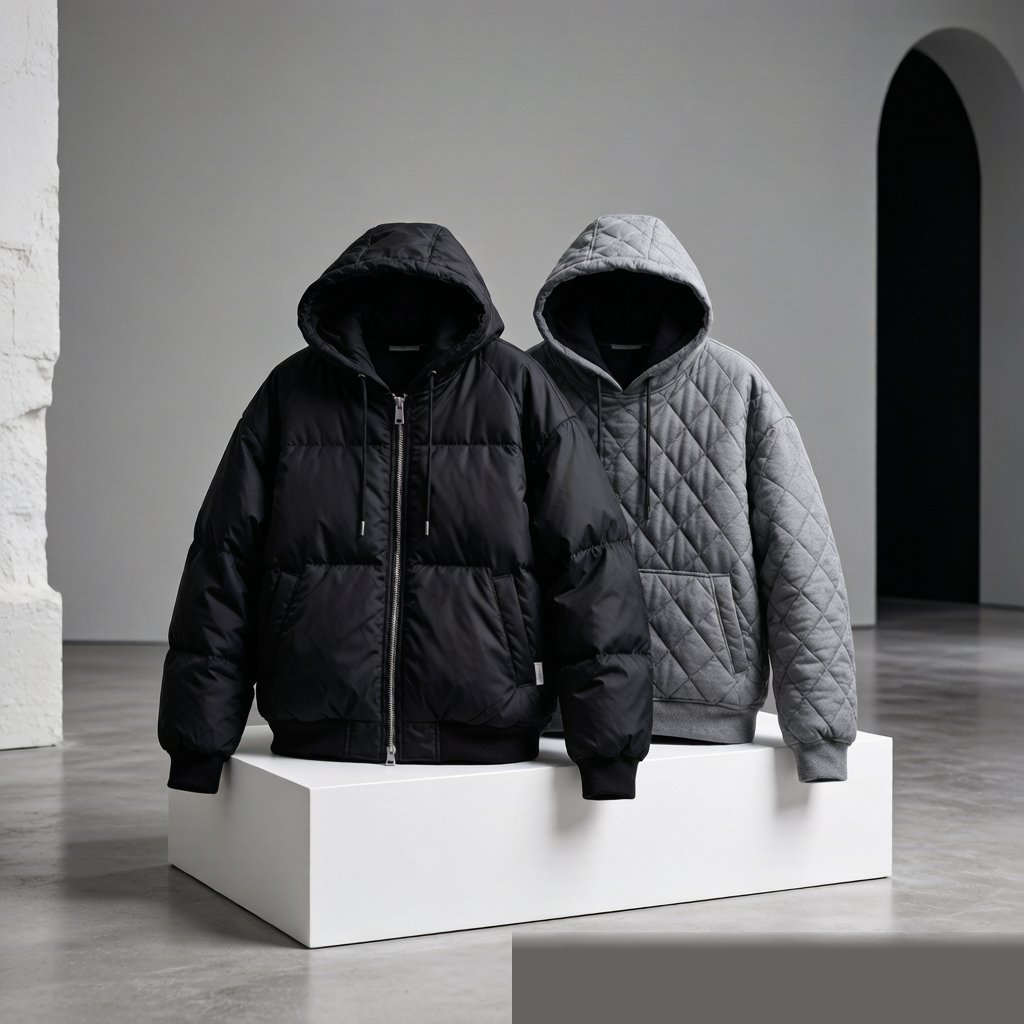
A puffer or quilted hoodie is not simply a hoodie with padding. It is a hybrid garment that combines the structure and insulation logic of a puffer jacket with the silhouette and comfort of a hoodie. The quilting — the stitched pattern that creates those signature geometric chambers — is both functional (holding insulation in place) and aesthetic (creating visual texture that defines the product).
Unlike a standard fleece hoodie where the fabric does all the work, a quilted hoodie is an engineered garment. Every decision — insulation type, chamber size, baffle construction, shell fabric, lining — affects warmth, weight, drape, and cost. Get these right, and you have a premium winter piece that justifies a $90–$180 retail price point. Get them wrong, and you have a lumpy, cold, overpriced hoodie.
Puffer Hoodie
- 3D baffle construction with visible volume
- Higher insulation fill (80–200 gsm)
- Designed for maximum warmth retention
- Puffer jacket aesthetic in hoodie form
- Typical retail: $100–$180
Quilted Hoodie
- Flat or low-profile quilt stitching
- Lighter insulation layer (40–100 gsm)
- Balances warmth with breathability
- Streetwear-focused with texture detail
- Typical retail: $70–$140
2. Insulation Materials: Down vs. Synthetic
The insulation you choose defines the warmth, weight, washability, and price of your puffer hoodie. This is the single most important material decision in the entire production process.
| Property | Natural Down | Synthetic (Polyester Fill) |
|---|---|---|
| Warmth-to-Weight | Excellent (800+ fill power) | Good (Cirrus, PrimaLoft) |
| Performance When Wet | Loses loft, slow to dry | Retains 70–80% warmth |
| Washability | Difficult — requires special care | Easy — machine washable |
| Cost per Meter | $8–$18 | $2–$6 |
| Sustainability | Natural but animal-derived; RDS certified | rPET options available; fully vegan |
| Best For | Premium, lightweight warmth | Streetwear, active use, easy care |
For most winter streetwear collections, synthetic insulation is the practical choice. It is more affordable, easier to care for, performs better in damp conditions, and aligns with the growing demand for vegan and recycled materials. Premium brands targeting the luxury segment may opt for responsibly sourced down (RDS certified) for its unbeatable warmth-to-weight ratio.
3. Shell Fabrics: The Outer Layer That Defines Everything
The shell fabric is the visible face of your puffer hoodie. It needs to look good, feel premium, and perform — resisting wind, trapping heat, and holding the quilting pattern without distortion.
Nylon Taslan
The most common puffer shell. Lightweight, wind-resistant, slightly textured surface. 70D–100D weights work best for hoodies. DWR coating adds water repellency.
Recycled Polyester Ripstop
Grid-pattern weave that resists tearing. Strong sustainability story with rPET content. Slightly heavier than nylon but more durable for everyday streetwear.
Organic Cotton-Blend Shell
For brands wanting a softer, less technical look. Cotton-poly blend (60/40) with a light DWR finish. Trades some wind resistance for a more casual aesthetic.
Soft-Shell Stretch Woven
Adds 2–4% spandex for mobility. Premium feel, great for athleisure-adjacent streetwear. Higher cost but differentiates from standard puffer shells.
Matte Coated Polyester
Flat, non-shiny finish that photographs beautifully. The matte look is trending hard in 2026 streetwear. Requires careful quality control to avoid coating peeling.
Mini-Ripstop Nylon
Fine grid pattern, ultralight, premium hand-feel. Often used in luxury puffer pieces. Pairs well with high-loft down insulation for maximum warmth at minimum weight.
Shell weight matters as much as material type. For winter streetwear hoodies, aim for 70D–100D nylon or polyester at 80–120 gsm. Go too light and the fabric feels flimsy and shows insulation migration; go too heavy and you lose the puffer's signature lightweight feel.
4. Quilting Patterns & Construction Methods
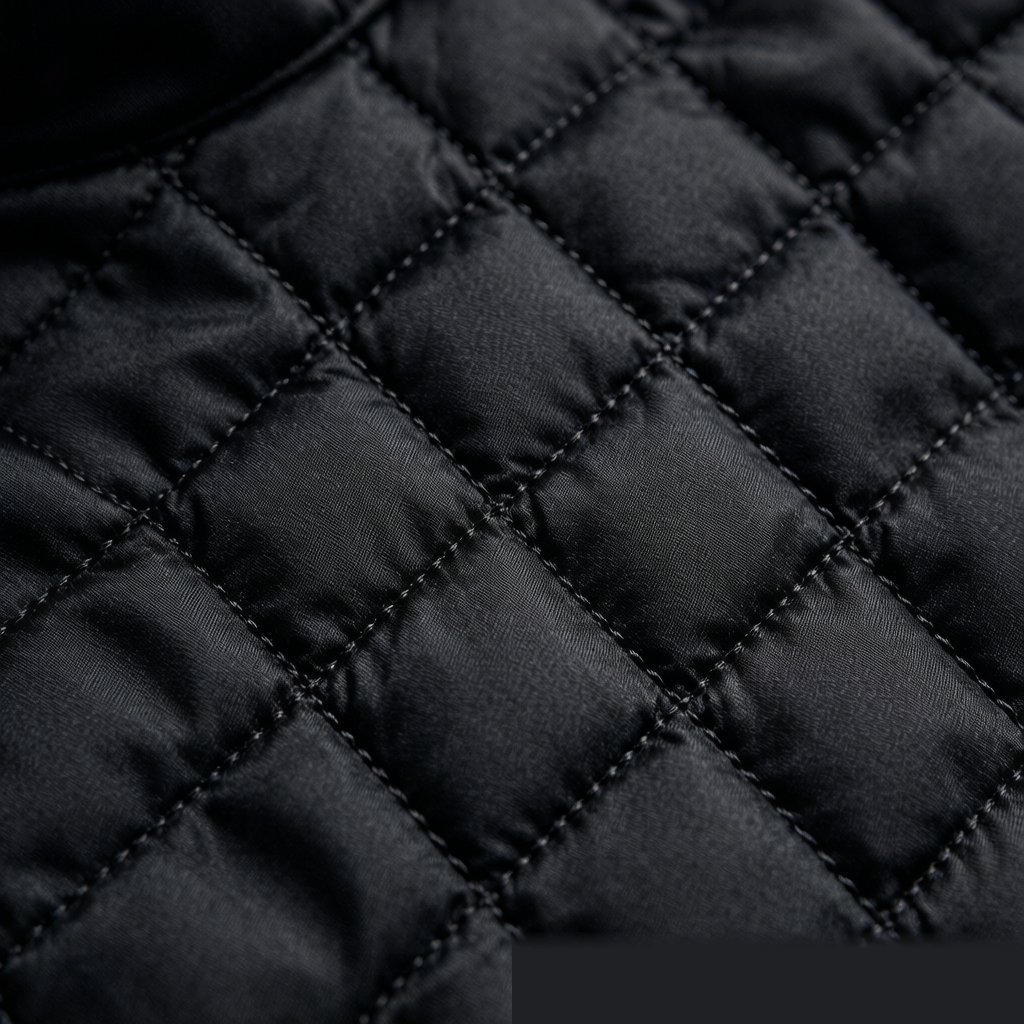
The quilting pattern is where function meets fashion. It secures the insulation, creates the visual identity of the garment, and affects how the hoodie drapes on the body. Choosing the right pattern is a design decision with real manufacturing implications.
Diamond Quilt
The classic puffer pattern. Diamond shapes (2–4 inch) distribute insulation evenly. Sewn-through construction keeps cost down. Most recognizable puffer aesthetic.
Horizontal Channels
Parallel horizontal baffles. Clean, modern, minimal. Works well with both sewn-through and baffle construction. Insulation can shift vertically — specify narrow channel width (1.5–2.5 inch).
Vertical Channels
Less common but distinctive. Creates a elongating visual effect. Better for lighter insulation since vertical channels allow more heat migration than diamond or horizontal patterns.
Square / Box Quilt
Grid of square chambers. Even insulation distribution, structured look. Often paired with baffle construction for premium pieces. Higher manufacturing complexity.
Custom / Asymmetric
Brand-specific patterns — chevrons, waves, geometric layouts. Strongest differentiation but requires custom pattern programming on the quilting machine. Adds 10–15% to production cost.
Micro-Quilt (Channel Quilt)
Narrow channels (0.5–1 inch) with minimal insulation. Creates subtle texture without bulk. Ideal for quilted hoodies that prioritize style over maximum warmth.
Sewn-Through vs. Baffle Construction
This is a critical manufacturing decision that affects warmth, appearance, and cost:
Sewn-Through
- Shell and lining stitched together directly
- Creates flat seams where insulation is compressed
- Lighter weight, lower cost, faster production
- Heat escapes at stitch lines — 15–20% less efficient
- Best for: quilted hoodies, mild winter, streetwear aesthetic
Baffle Construction
- Internal fabric walls connect shell and lining
- Insulation maintains full loft at seam lines
- Warmer, more 3D volume, premium look
- Higher cost (+$3–$8/unit), slower production
- Best for: puffer hoodies, cold climates, premium positioning
5. The Manufacturing Process: From Tech Pack to Finished Hoodie
Producing a puffer or quilted hoodie involves more steps than a standard fleece hoodie. The insulation layer adds complexity at every stage — from cutting to sewing to quality control. Here is the complete workflow:
Tech Pack & Pattern Engineering
Your tech pack must specify insulation type and weight, quilting pattern with exact dimensions, baffle height (if applicable), shell and lining fabric specs, and seam construction details. Puffer hoodies require a separate pattern for the insulation layer — it is cut slightly smaller than the shell to prevent migration at edges. A complete tech pack reduces sampling rounds from 3–4 to 1–2.
Fabric Sourcing & Quilting
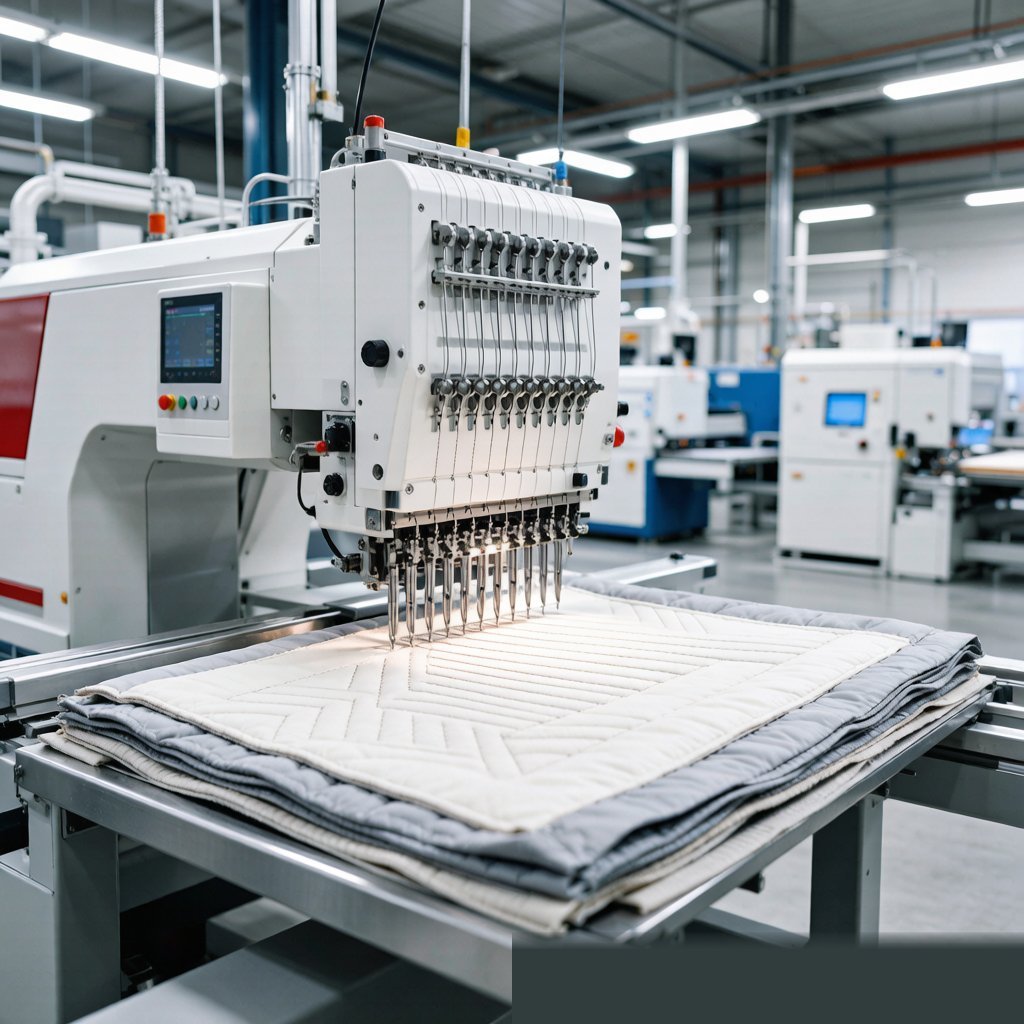
The factory sources shell fabric, lining, and insulation. The quilting process happens early — shell and lining are quilted together (with insulation sandwiched between) on a programmable multi-needle quilting machine before cutting. This quilted fabric is then treated as a single material for pattern cutting. Quilting machine setup time is 2–4 hours per pattern change.
Cutting & Component Prep
The quilted fabric is cut using the hoodie pattern. Special attention is needed at curves (hood, armholes) to prevent insulation from escaping at cut edges. Edge binding tape is prepared to seal all raw quilted edges. Drawcord channels, zipper tape, and hardware (grommets, cord stops) are prepped in parallel.
Sewing & Assembly
Assembly follows a specific sequence: edge-bind all quilted panel edges first, then construct the body (shoulder seams, side seams), attach the hood (double-layer with interlining for structure), set the kangaroo pocket or zippered pockets, and finally attach cuffs and hem ribbing. Critical quality points: stitch tension must be consistent to avoid compressing insulation at seams, and all quilted edges must be fully bound to prevent insulation migration.
Finishing & Quality Control
Post-sewing, the hoodie is inspected for insulation distribution (no clumping or bare spots), seam integrity (especially at quilted edge bindings), zipper function, and overall silhouette. A light steam press evens out the quilting pattern. Final AQL 2.5 inspection checks measurements, stitch quality, and insulation evenness across all panels.
6. Design Elements for 2026 Winter Streetwear
Beyond the technical construction, specific design choices will define what stands out in the 2026 winter streetwear market. Here are the trends and details driving the category:
Oversized Puffer Silhouette
Volume is everything. A drop-shoulder cut with extended body length and an oversized hood creates the "sleeping bag" aesthetic that dominates streetwear. Requires 20–35% more fabric and insulation but commands premium retail.
Matte & Textured Shells
Glossy puffer nylon is out. Matte-coated polyester, crinkle-texture nylon, and brushed finishes are in. These surfaces photograph better for social media and feel more premium in hand.
Hybrid Insulation Zones
Premium pieces use heavier insulation in the body (100–150 gsm) and lighter fill in the sleeves and hood (40–60 gsm) for better mobility. This requires separate quilting runs but creates a noticeably better-fitting garment.
Tonal Branding & Hardware
Matte black cord stops, tonal woven labels, and tone-on-tone embroidery. The branding should be discovered, not shouted. Premium metal aglets on drawcords add a tactile quality cue.
Hidden Zip Pockets
Concealed YKK zippers on the side seams or inside the kangaroo pocket. Adds utility without disrupting the clean quilted exterior. A detail that justifies a higher price point.
Contrast Lining
A pop of color or pattern on the inside — visible when the hood is down or the zipper is open. Costs almost nothing but adds perceived value and brand identity. Popular: camo prints, brand repeating logos, bold solid colors.
7. MOQ, Pricing & Production Timeline
Puffer and quilted hoodies are more complex and costly to produce than standard fleece hoodies. Understanding the numbers helps you plan your collection budget and pricing strategy:
For a first winter collection of 3 colorways at 150 pieces each, expect a total production investment of approximately $8,500–$19,000 FOB (sampling, production, excluding shipping). This positions your retail price at $90–$180 per hoodie, with gross margins of 60–70% — healthy for a premium winter piece.
8. Common Manufacturing Pitfalls & How to Avoid Them
Puffer and quilted hoodies have more failure points than any other hoodie type. Here are the issues we see most often at Ytscasual — and how to prevent them:
Insulation Migration
Insulation clumps or shifts inside chambers after washing. Caused by incomplete edge binding or too-wide quilting channels. Fix: specify maximum channel width of 3 inches and require full-edge binding tape on every panel.
Inconsistent Loft Across Sizes
The same insulation weight is used for all sizes, making smaller sizes look over-stuffed and larger sizes look flat. Fix: specify insulation weight per size in your tech pack, grading 10–15% from XS to XL.
Hood Collapse After Quilting
The quilted hood loses structure and flops. Caused by insufficient interlining or too-light shell fabric. Fix: use a double-layer hood with woven fusible interlining and minimum 90D shell fabric.
Seam Puckering on Quilted Panels
Stitching on quilted fabric creates wavy, uneven seams. Caused by wrong needle type or tension settings on the sewing machine. Fix: specify ballpoint needles, reduced presser foot pressure, and have the factory test-stitch a sample panel before bulk sewing.
Shell Fabric Show-Through
Dark insulation visible through a light-colored shell. Caused by mismatched insulation color or insufficient opacity in the shell. Fix: always specify white insulation for light shells, and verify shell opacity (minimum 85%) during fabric sourcing.
Zipper Tape Buckling
The zipper area puckers or waves because the quilted fabric is thicker than the zipper tape. Fix: specify a zipper insertion method that includes a flat-felled seam or use a wider zipper tape (1.5 inch) to accommodate the quilted fabric thickness.
9. Sustainability Considerations for Puffer Hoodies
Winter outerwear faces increasing scrutiny on sustainability. Puffer hoodies use synthetic materials extensively, but there are meaningful choices that reduce environmental impact without sacrificing performance:
Material Choices
- rPET Shell Fabric: Recycled polyester from post-consumer bottles. Same performance as virgin polyester, 50–70% lower carbon footprint.
- Recycled Synthetic Insulation: PrimaLoft Bio, Cirrus HL — made from recycled content, comparable warmth to virgin fills.
- RDS-Certified Down: If using down, ensure Responsible Down Standard certification for animal welfare compliance.
- Bluesign-Approved Fabrics: Verified for chemical safety and resource efficiency in production.
Production Practices
- Marker Efficiency: Quilted fabric cutting generates 8–12% waste. Optimize pattern layout to reduce this to 5–6%.
- DWR Alternatives: Choose PFC-free DWR coatings to eliminate harmful fluorocarbons.
- Digital Pattern Programming: Reduces sampling waste by 30–40% versus physical prototyping iterations.
- Modular Design: Design for disassembly — components that can be separated for recycling at end-of-life.
Ytscasual offers a full range of sustainable material options for puffer hoodies, including rPET shells, recycled insulation, PFC-free DWR, and Bluesign-approved fabrics. We provide material certification documentation for your brand's transparency and marketing claims.
10. FAQ: Puffer & Quilted Hoodie Manufacturing
What is the difference between a puffer hoodie and a quilted hoodie?
A puffer hoodie uses baffle construction with higher-loft insulation (80–200 gsm), creating visible 3D volume and maximum warmth. A quilted hoodie uses sewn-through stitching with lighter insulation (40–100 gsm), creating a flatter profile with subtle texture. Puffer hoodies are warmer and more expensive; quilted hoodies are more versatile and streetwear-friendly.
Can I use down insulation in a hoodie?
Yes, but it is less common than synthetic fill for hoodies. Down offers superior warmth-to-weight but requires more careful construction (fully sealed seams, down-proof lining fabric to prevent leakage) and is harder to care for. If you choose down, specify a minimum 800 fill power, RDS certification, and a down-proof lining (minimum 290T weave density). At Ytscasual, we support both down and synthetic options with full material sourcing.
What is the ideal insulation weight for a winter streetwear hoodie?
For most winter streetwear markets (0°C to -10°C), 80–120 gsm synthetic insulation in the body and 40–60 gsm in the sleeves and hood provides the right balance of warmth, weight, and mobility. For extreme cold (-10°C to -25°C), increase to 150–200 gsm. For mild winter markets (5°C to 10°C), 40–80 gsm is sufficient. Always consider your target market's climate.
How much more does a puffer hoodie cost to produce vs. a regular hoodie?
Expect 60–120% higher FOB cost compared to a standard fleece hoodie of similar quality. The cost difference comes from insulation material ($2–$8/unit), quilting labor ($1–$3/unit), more complex cutting and sewing ($2–$4/unit), and edge binding materials ($0.50–$1.50/unit). A $14 standard hoodie becomes a $22–$31 puffer hoodie at similar volume.
Can I do a custom quilting pattern for my brand?
Absolutely. Custom quilting patterns (chevrons, asymmetric lines, brand logos quilted into the fabric) are one of the strongest ways to differentiate your puffer hoodie. The factory programs the pattern into the multi-needle quilting machine. Expect a one-time setup cost of $200–$500 for pattern programming and 10–15% additional production cost. At Ytscasual, we offer custom quilting pattern development as part of our design support service.
What quality inspections are specific to puffer hoodies?
Beyond standard hoodie QC (measurements, stitching, fabric defects), puffer hoodies require additional checks: insulation evenness (no bare spots or clumps), edge binding completeness (no gaps where insulation can escape), quilting pattern alignment (pattern continuity across seams), DWR performance (water beading test), and loft measurement (insulation thickness verification against spec). AQL 2.5 is the minimum standard for puffer production.
When should I start production for a winter collection?
Start tech pack development in April–May, complete sampling by June–July, and begin bulk production in July–August for September–October delivery. Puffer hoodies take 5–7 weeks for production plus 2–3 weeks for shipping. Missing the July production window risks late delivery past the winter selling season. Ytscasual accepts winter collection bookings from April through August, with priority scheduling for early commitments.
Build Your Winter Collection with Ytscasual
Puffer and quilted hoodies are one of the highest-margin categories in winter streetwear. With the right insulation, shell fabric, quilting pattern, and construction method, you can create a product that outperforms and outlasts competitors charging twice your production cost.
The key is understanding the manufacturing process end-to-end: from insulation selection to quilting machine programming to edge binding quality control. When you know what to specify and what to inspect, you turn a complex garment into a repeatable, profitable production run.
Ytscasual is a full-service custom apparel manufacturer specializing in winter streetwear, puffer hoodies, quilted jackets, and premium cut-and-sew casual wear. From insulation sourcing to custom quilting patterns to final AQL 2.5 inspection, our team handles every detail so your winter collection hits the market on time and on spec.
Ready to start your winter collection? Send us an inquiry or browse our catalog to explore what Ytscasual can build for your brand.