Cotton Hoodies vs Synthetic: Fabric Comparison Guide for Custom Brands
When you are building a custom clothing line, the fabric you choose for your hoodies is more than a material decision — it is a brand decision. Cotton and synthetic fabrics each tell a different story to your customers, perform differently in wear, and behave differently when printed, embroidered, or washed 100 times. This guide breaks down the comparison so your brand can choose with confidence.
1. Cotton Hoodies: The Streetwear Classic
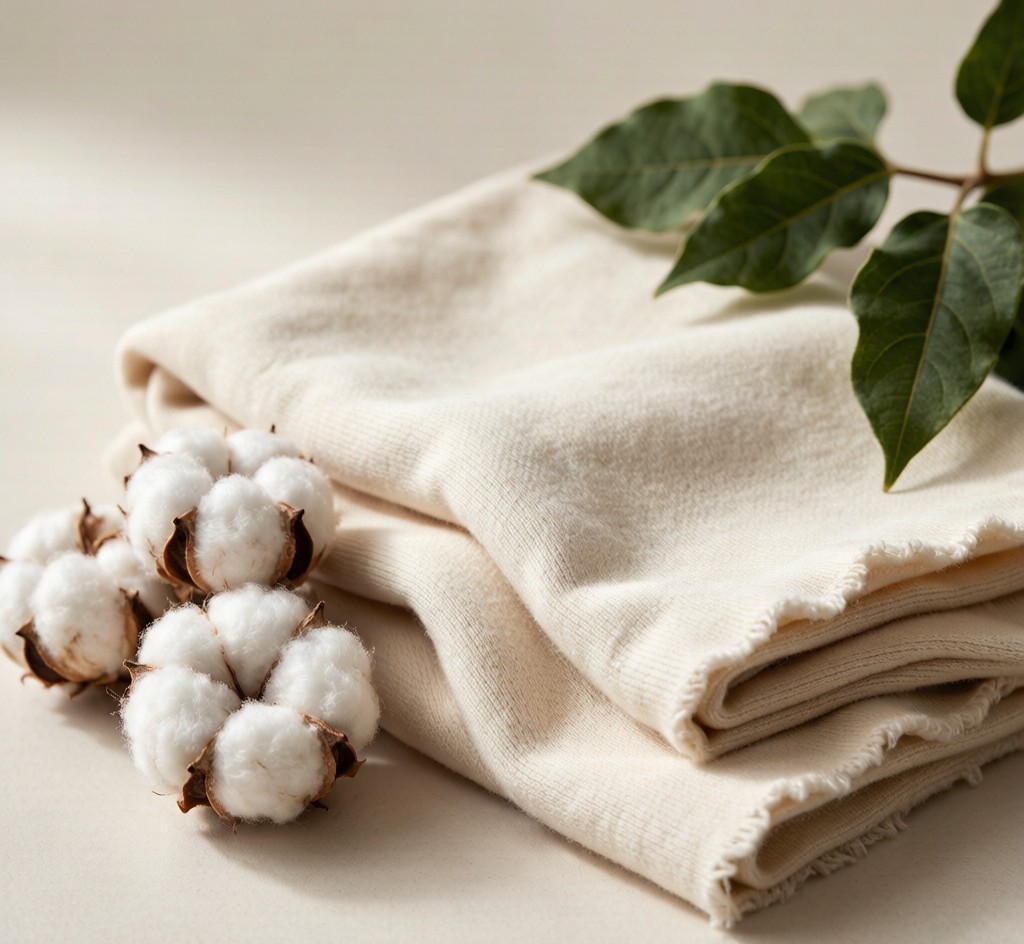
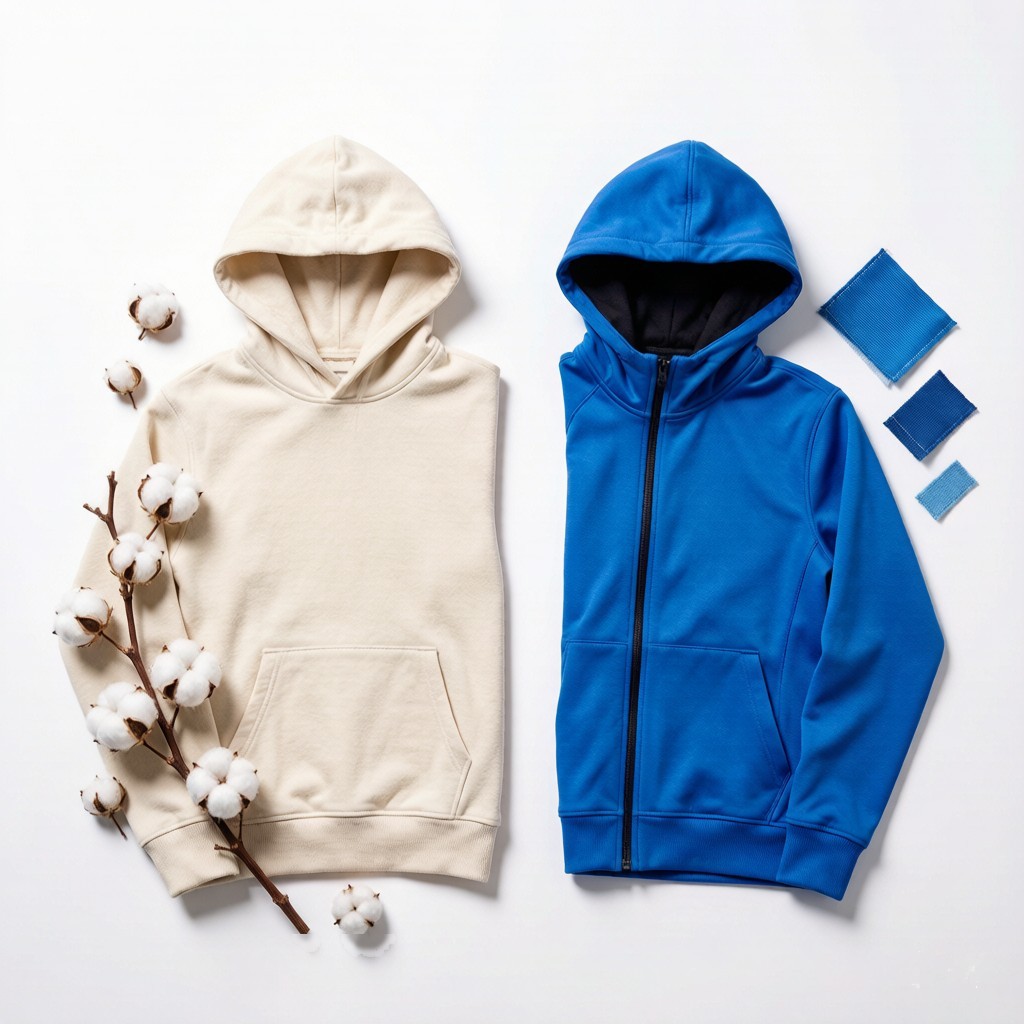
Natural cotton fleece offers unmatched softness and a premium print surface.
Cotton has been the backbone of streetwear since the beginning. From heavyweight blank hoodies that hold their shape to brushed-back fleece with that premium hand-feel, cotton is what most customers expect when they pick up a hoodie. For custom brands, it is the safe — and often the smartest — starting point.
What "Cotton" Actually Means
Not all cotton hoodies are created equal. When sourcing, you will encounter several constructions:
- 100% Combed Ring-Spun Cotton: The premium tier. Softer, smoother surface, ideal for screen printing and DTG.
- Open-End Cotton: More affordable, slightly rougher hand, fine for simple prints and budget lines.
- French Terry: Loop-back construction, lighter weight, great for layering pieces and spring drops.
- Heavyweight Fleece (320–440 gsm): Brushed inside for warmth and structure — the streetwear standard.
Strengths
- Exceptional breathability and next-to-skin comfort
- Softer hand-feel that improves with washing
- Hypoallergenic — ideal for sensitive skin
- Superior print surface for screen print, DTG, and embroidery
- Perceived as premium and "natural" by end consumers
- Biodegradable and recyclable at end-of-life
Trade-offs
- Absorbs moisture — slower to dry, can feel heavy when wet
- Prone to shrinkage (5–10%) if not pre-shrunk
- Heavier to ship in bulk quantities
- Higher cost per unit at premium grades
- Color fading over many washes without proper dye process
- Can lose shape if fabric weight is too low
2. Synthetic Hoodies: The Performance Play
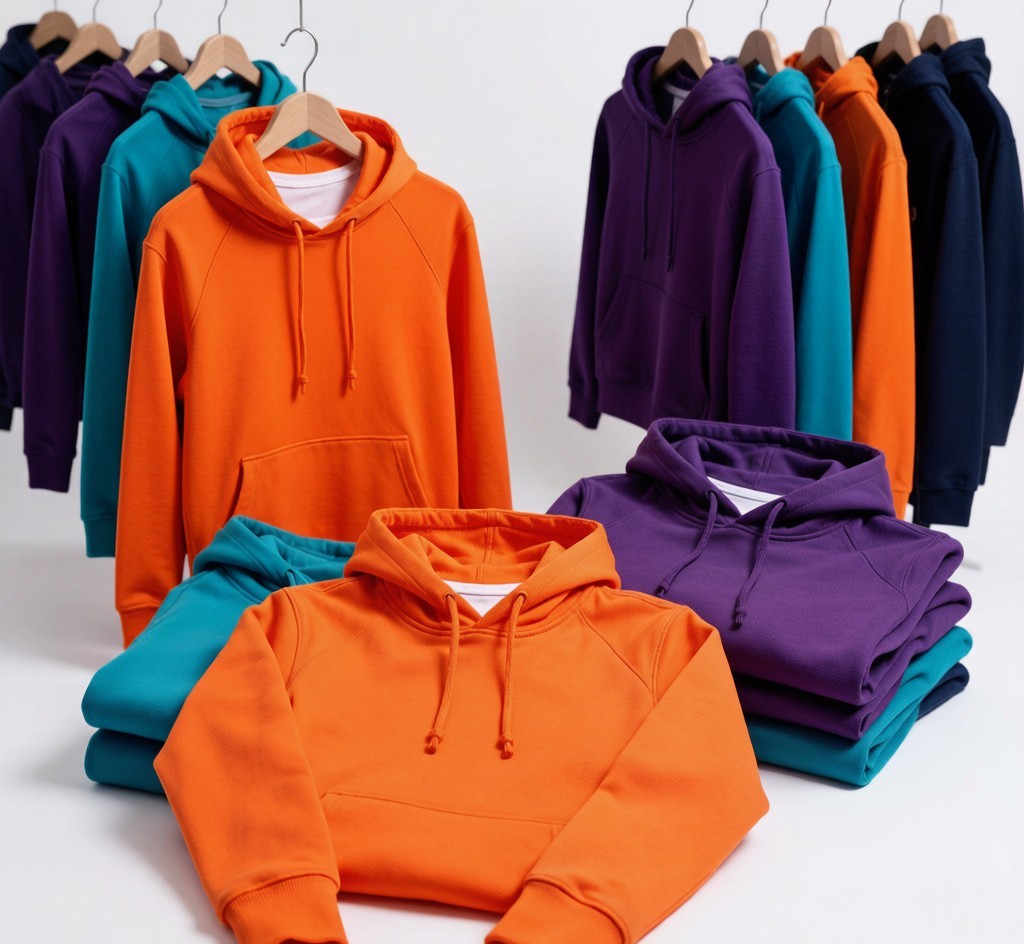
Synthetic blends deliver bold color and performance for activewear and athleisure lines.
Synthetic fabrics — polyester, nylon, and blends — dominate performance and athletic categories, and they are creeping into streetwear through techwear and athleisure. If your brand lives at the intersection of function and fashion, synthetics deserve a serious look.
The Synthetic Family
- 100% Polyester Fleece: Lightweight, moisture-wicking, fast-drying. Common in activewear.
- Poly-Cotton Blends (50/50, 60/40, 80/20): The compromise — cotton's hand-feel with polyester's durability.
- Recycled Polyester (rPET): Made from post-consumer plastic bottles. Strong sustainability story.
- Nylon-Spandex Blends: Stretch-heavy, wind-resistant — niche streetwear and technical shells.
Strengths
- Excellent moisture-wicking and quick-dry performance
- Highly durable — resists tearing, pilling, and abrasion
- Retains shape and color through heavy washing
- Lighter weight — cheaper to ship at scale
- Lower cost per unit in most constructions
- Vivid, fade-resistant colors via sublimation printing
Trade-offs
- Less breathable — can trap heat and odor
- Rougher hand-feel compared to combed cotton
- Prone to static cling
- Limited compatibility with DTG and water-based inks
- Microplastic shedding in washing — environmental concern
- Perceived as "cheap" by premium streetwear consumers
3. Head-to-Head: The Full Comparison
Here is the attribute-by-attribute breakdown custom brands actually care about when sourcing.
| Attribute | Cotton | Synthetic / Blend |
|---|---|---|
| Comfort & Softness | Excellent — improves with wash | Good — consistent but cooler to touch |
| Breathability | High | Medium (blends improve this) |
| Moisture Wicking | Low — absorbs moisture | High — pulls sweat away |
| Dry Time | Slow | Fast |
| Durability | Good | Excellent |
| Shape Retention | Medium — may shrink | Excellent |
| Color Fastness | Good (with reactive dye) | Excellent |
| Print Compatibility | Screen print, DTG, embroidery | Sublimation, screen print (limited DTG) |
| Weight (per hoodie) | Heavier | Lighter |
| Cost (wholesale) | Higher at premium grades | Lower, more consistent pricing |
| Sustainability | Biodegradable, organic options available | rPET improves footprint; microplastic concern remains |
| Customer Perception | Premium, natural, authentic | Performance, value, technical |
4. The Scorecard
A quick visual snapshot for fast decisions.
5. How to Choose for Your Custom Brand
There is no universal winner — only the right fabric for your brand's positioning, price point, and customer. Use this decision flow:
The most versatile middle ground for custom brands is an 80/20 cotton-poly blend in 320 gsm French terry. It delivers 90% of cotton's comfort, 80% of synthetic's durability, accepts most print methods, and keeps wholesale pricing reasonable. If you can only stock one hoodie fabric, this is it.
6. What to Ask Your Supplier
Before placing a wholesale order, get clear answers on these specs — they make or break the final product:
- Fabric weight (gsm): 240–300 gsm is midweight; 320+ gsm is heavyweight streetwear territory.
- Yarn construction: Combed ring-spun over open-end. The difference shows in print clarity and hand-feel.
- Pre-shrunk? Critical for sizing consistency across reorders.
- Dye method: Reactive dye for cotton (better colorfastness), disperse dye for polyester sublimation.
- Finish: Brushed, peached, or smooth? Affects both look and print surface.
- Certifications: OEKO-TEX, GOTS (organic cotton), GRS (recycled polyester) — increasingly expected by Western buyers.
7. Frequently Asked Questions
Is cotton always better quality than synthetic?
No. Quality depends on yarn construction, weight, and finish — not fiber type alone. A well-made poly-cotton blend can outperform a cheap open-end cotton hoodie in durability, colorfastness, and shape retention.
Which fabric is better for custom printing?
For screen printing and DTG, cotton is the clear winner — inks bond better and colors stay vivid. For full-coverage all-over sublimation prints, polyester is required. Blends work for most methods but with slightly muted results.
Do cotton hoodies shrink more than synthetic?
Yes, typically 5–10% without pre-shrinking. Always specify pre-shrunk fabric with your supplier, and include care instructions with every order. Synthetics barely shrink.
What is more sustainable — cotton or recycled polyester?
It depends on the full lifecycle. Organic cotton is biodegradable but water-intensive. Recycled polyester diverts plastic waste but sheds microplastics. The most sustainable choice depends on your brand's specific environmental priorities.
What is the minimum order quantity (MOQ) for custom hoodies?
At YTSCASUAL, MOQ typically starts at 50–100 pieces per design and color. Cotton and poly-cotton blends share similar MOQs. Contact the YTSCASUAL team for exact figures based on your customization needs.
8. The Bottom Line
Cotton and synthetic hoodies are not competitors — they are tools for different jobs. Cotton wins on comfort, print quality, and premium perception. Synthetic wins on durability, cost, and performance. The smartest custom brands do not pick a side; they match the fabric to the product, the price point, and the customer.
If you are just launching, start with a midweight cotton or 80/20 blend — it is the lowest-risk fabric that satisfies the widest range of customers. Once you know your audience, expand into specialized fabrics that reinforce your brand's positioning. To explore ready-to-customize options, browse the product catalog or send an inquiry.