Boxy T-Shirt Trend Guide: Oversized Fit Manufacturing for Streetwear Brands
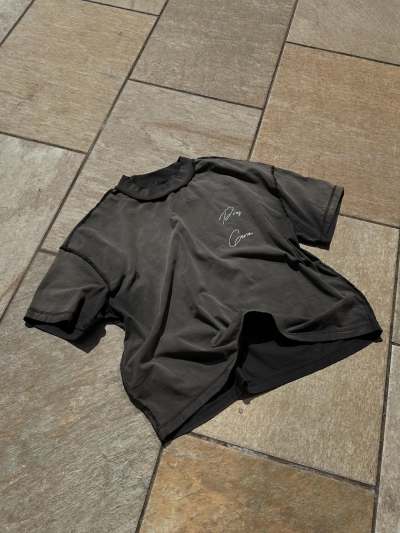
The boxy t-shirt has gone from a niche Japanese streetwear silhouette to a global staple. The signature combination — wide body, dropped shoulder, cropped length, and relaxed sleeve — creates a structure that reads as intentional rather than sloppy. At Ytscasual, we manufacture boxy and oversized t-shirts for streetwear brands worldwide. This guide covers the trend, design, fabric, pattern engineering, and production process — from concept to finished product.
The Boxy Fit Trend: Why It Matters Now
The skinny-fit era gave way to looser, more expressive silhouettes — and the boxy tee sits at the center of that shift. Here is why the trend has staying power:
Sustained Demand Growth
Boxy and oversized fits have grown 40%+ year-over-year in streetwear since 2023. Major retailers now stock boxy tees as a permanent silhouette.
Cross-Demographic Appeal
The boxy fit flatters all body types and is gender-neutral. Brands report 30-50% of sales come from female customers buying unisex sizing.
Social Media Native
The structured drape of a boxy tee photographs exceptionally well — drops built around boxy silhouettes consistently outperform on Instagram and TikTok.
Premium Price Positioning
Boxy tees retail at $35–$80 against a factory cost of $5–$12. The perceived value of an oversized, structured garment supports premium pricing.
Anatomy of a Boxy T-Shirt
A boxy t-shirt is not simply a regular tee sized up. The silhouette is engineered through specific pattern decisions:
Wide Body Width
Chest width is 25-30% wider than a regular fit. A size M measures 24-26 inches across the chest versus 20-21 inches for standard fit.
Dropped Shoulder
The shoulder seam sits 2-4 inches below the natural shoulder point — the single most defining feature of the boxy silhouette.
Square Length
Body length is equal to or slightly shorter than a regular tee, creating a square proportion. Typical: 26-28 inches for a size M.
Shorter, Wider Sleeves
Sleeves are cut shorter (7-9 inches) and wider to complement the boxy body, with a larger opening for relaxed drape.
Pro Tip from Ytscasual
The most common mistake brands make is simply grading up a regular pattern. This produces a tent-like garment with long sleeves and a droopy hem. A true boxy fit requires a purpose-built block pattern — invest in the pattern, it is the foundation of the entire product.
Fabric Selection for Boxy T-Shirts
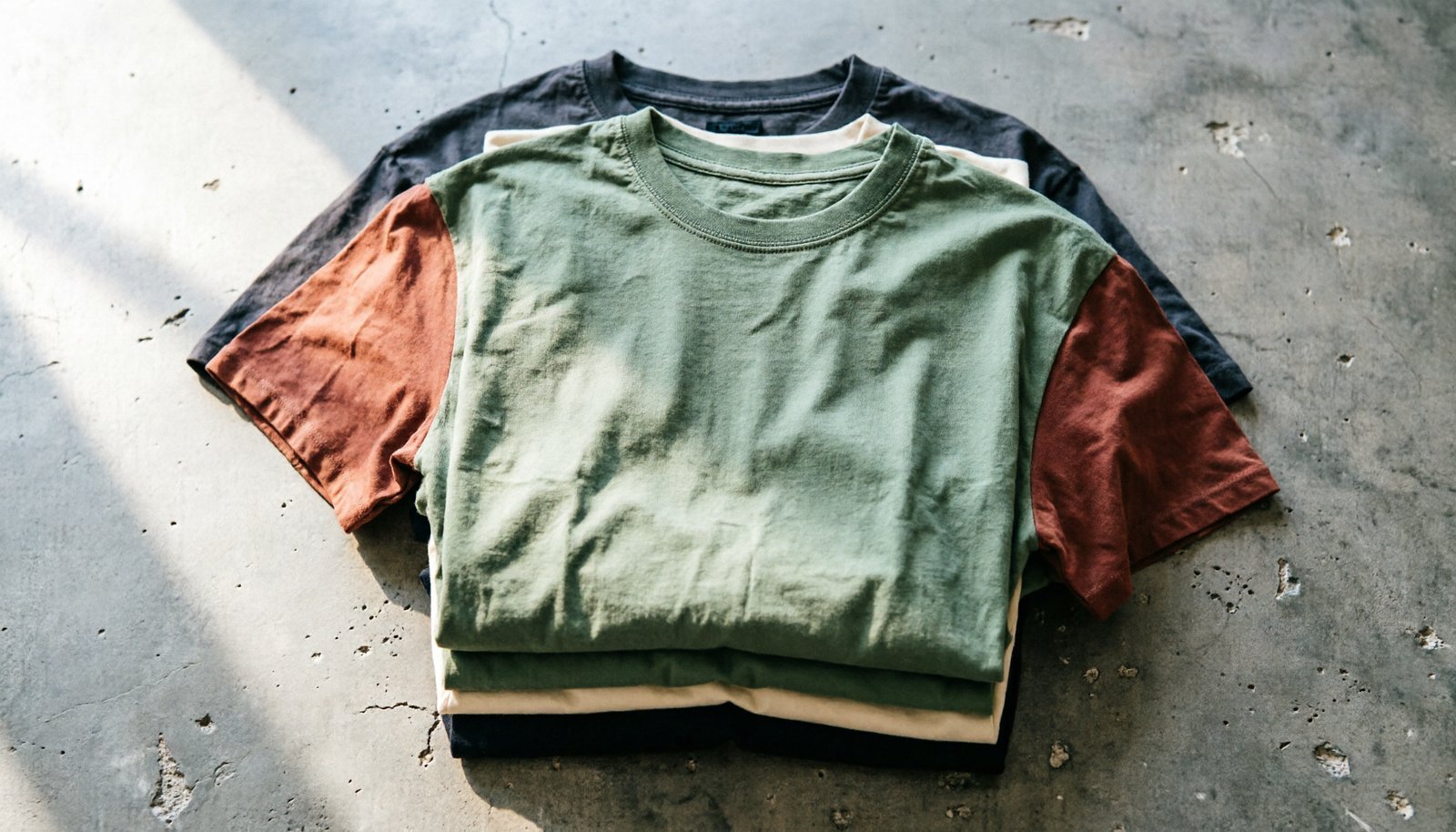
Fabric choice is critical — the silhouette depends on the fabric holding its structure. A limp, lightweight fabric will collapse into a shapeless drape. We help brands select from these proven options:
Heavyweight Combed Cotton
Weight: 240–300 GSM
Composition: 100% combed cotton
Best for: Premium streetwear
Properties: Dense structure, holds boxy shape, smooth print surface
Cotton-Polyester Blend
Weight: 220–280 GSM
Composition: 60/40 or 80/20
Best for: Everyday streetwear
Properties: Reduced shrinkage, wrinkle-resistant, retains shape
Slub Cotton Jersey
Weight: 220–280 GSM
Composition: 100% slub cotton
Best for: Fashion streetwear
Properties: Unique textured surface, organic drape, elevated hand-feel
Garment-Dyed Heavyweight
Weight: 250–320 GSM
Composition: 100% cotton
Best for: Vintage washed aesthetic
Properties: Pre-shrunk, lived-in feel, rich tonal color depth
Fabric Weight Matters
For a true boxy silhouette, 240 GSM minimum. Below 220 GSM the fabric lacks body. Above 300 GSM the garment becomes stiff. The sweet spot: 250-280 GSM.
Pattern Engineering for the Boxy Silhouette
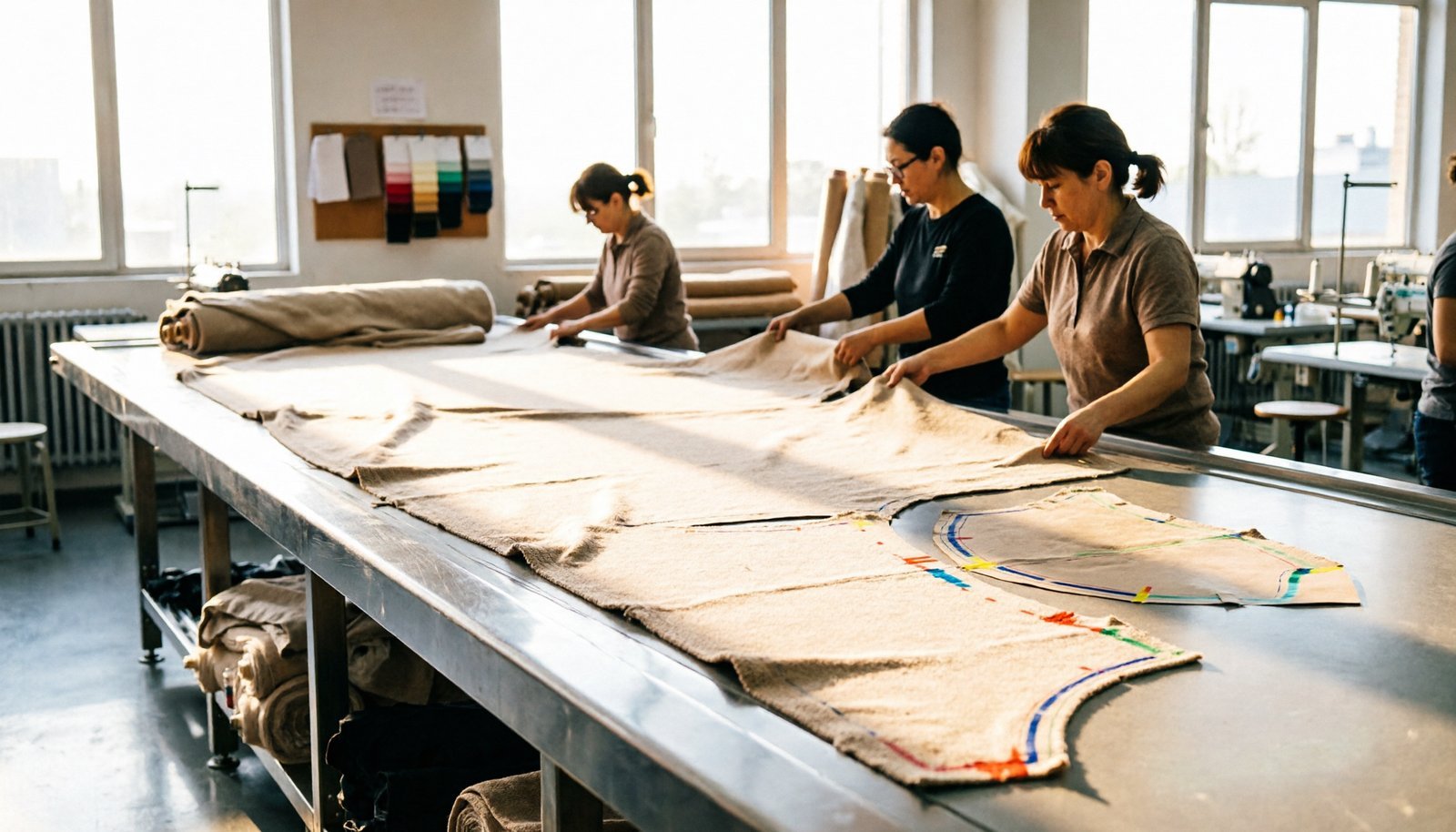
Pattern making is where the boxy t-shirt lives or dies. Our pattern masters build purpose-designed blocks that engineer the silhouette from the ground up:
Boxy Block Development
We create a dedicated boxy block from scratch using CAD software (Lectra and Gerber). The block sets body width, shoulder drop, sleeve angle, and hem proportions — tested on a fit form before prototyping.
Prototyping and Fit Refinement
We sew the first prototype in your selected fabric and send detailed photos on a fit form and live model. Most brands request 2-3 fit rounds to dial in the exact boxy proportions. Each revision takes 3-5 days.
Size Grading
Once the base fit is approved, we grade across your full size range (typically XS to XXL). Grade rules for boxy fits differ from regular fits — width grows faster than length to maintain the square proportion.
Pre-Production Sample (PPS)
The PPS is the final sample before bulk, using exact fabric, trims, and construction. We hold it as the reference standard — every bulk garment is measured against it.
Production Timeline at Ytscasual
Fabric sourcing: 5-7 days | Sampling (proto to PPS): 10-15 days | Bulk production (500 pcs): 12-15 days | Bulk (2,000+ pcs): 18-25 days | Final inspection and packing: 3-5 days
Customization Options
What separates a generic boxy tee from a brand-defining one is in the details. Ytscasual offers full customization:
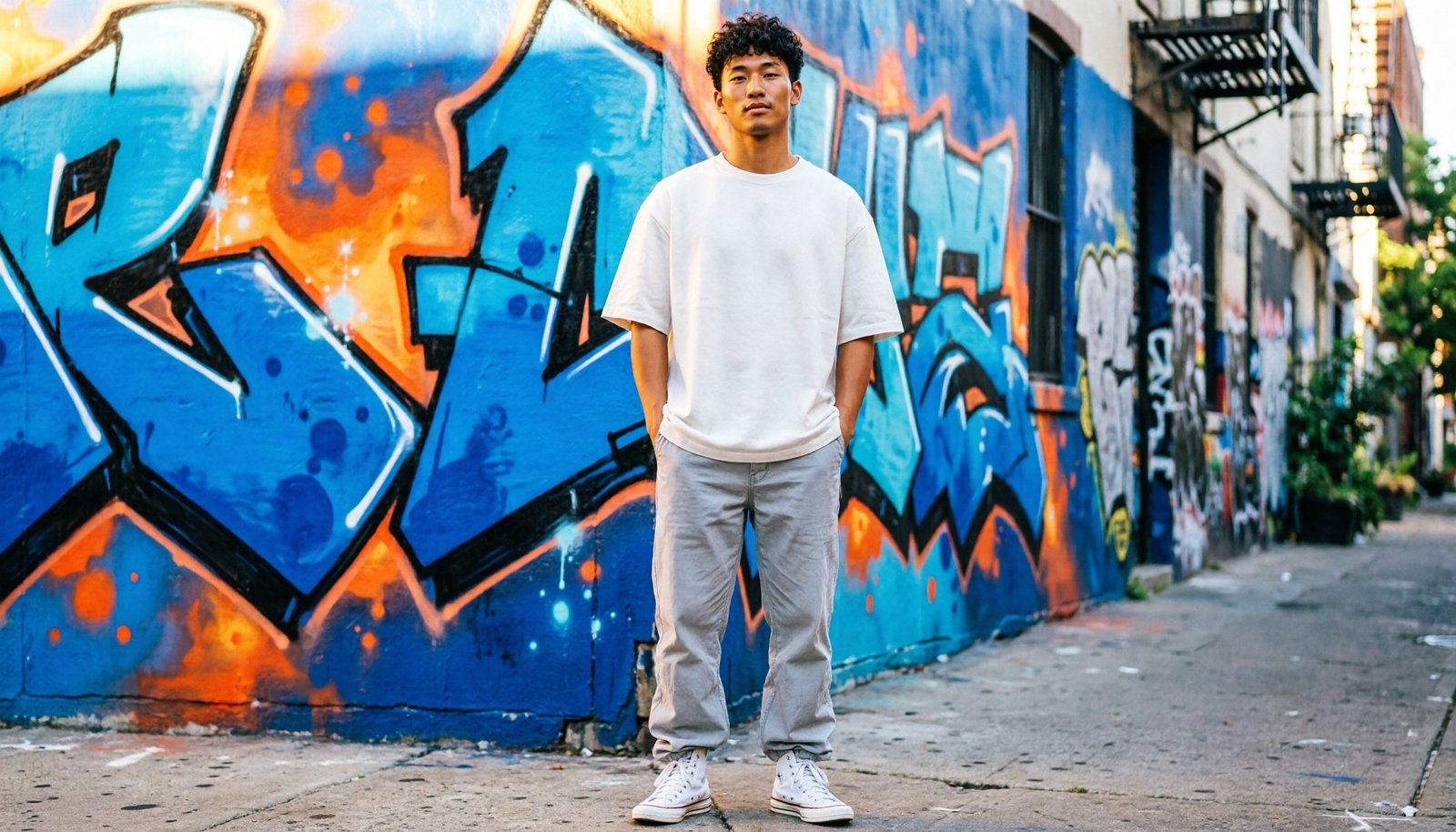
Fit and Proportion
Cropped boxy, standard boxy, long-line, or exaggerated oversized. We adjust width, length, and shoulder drop to match your target.
Color and Dye
Custom Pantone matching, garment dye, acid wash, pigment dye, or mineral wash. Garment dye pairs perfectly with the boxy silhouette.
Printing and Embroidery
Screen printing, DTG, heat transfer, discharge, embroidery, and applique. The wide body provides a larger canvas than any other tee silhouette.
Labels and Branding
Woven labels, tagless heat-transfer, hem labels, custom hangtags, and poly bag stickers. Full private-label service included.
Boxy Fit vs. Regular Fit: Comparison
Is a boxy tee harder to manufacture than a regular tee? It requires a different pattern and tolerances, but it is not harder — it is different. Here is the head-to-head:
| Property | Boxy / Oversized | Regular Fit | Slim Fit |
|---|---|---|---|
| Chest Width (Size M) | 24-26 inches | 20-21 inches | 18-19 inches |
| Shoulder Position | 2-4 inch drop | At natural shoulder | At natural shoulder |
| Recommended Fabric | 240-300 GSM | 180-220 GSM | 160-200 GSM |
| Pattern Complexity | Purpose-built block | Standard block | Standard (graded down) |
| Retail Price Range | $35-$80 | $20-$45 | $18-$40 |
| Target Demographic | 18-34, streetwear | Broad, all ages | Fashion-forward, 18-30 |
Quality Standards and Production Capacity
Quality is non-negotiable in streetwear. A boxy tee that loses its shape after three washes will destroy brand trust. Here is our quality protocol and capacity snapshot:
Measurement Audit
Every batch measured against PPS spec with ±1cm tolerance on body, ±0.5cm on collar and shoulder drop.
Colorfastness
Wash, rub, and light fastness tested per ISO standards. Grade 4 minimum for streetwear.
Shrinkage Control
Max 5% shrinkage after 3 washes (AATCC 135). Pre-controlled for garment-dyed tees.
Monthly Capacity
Up to 50,000 t-shirts per month at peak. Scalable to 80,000 with line expansion.
MOQ
100 pieces per style per color. Ideal for emerging brands testing the market.
Lead Time (Days)
18-25 days for 2,000+ pieces from PPS approval. Reorders: 12-15 days.
Frequently Asked Questions
What is the MOQ for boxy t-shirts at Ytscasual?
Our MOQ is 100 pieces per style per color. For new brands, we recommend starting with 200-300 pieces across 2-3 colors. We scale up to 50,000+ per month for established brands.
How is a boxy t-shirt different from a regular oversized tee?
A true boxy tee has a purpose-built pattern: wide body, dropped shoulder, shorter length, and wider sleeves. A regular oversized tee is simply a standard pattern graded up — it tends to be long and tent-like. The boxy fit is engineered, not just scaled.
What fabric weight do you recommend?
240 GSM minimum, with 250-280 GSM being the sweet spot. Below 220 GSM the fabric lacks body. For garment-dyed boxy tees, 260-300 GSM produces the best lived-in structure.
Can you produce garment-dyed boxy t-shirts?
Yes. Garment dyeing is one of our specialties. The process pre-shrinks the fabric, creates rich tonal color depth, and produces a soft, lived-in hand-feel. We offer pigment, reactive, and mineral wash. Adds 5-7 days to production.
Key Takeaways
Build a purpose-designed boxy block pattern. Simply grading up a regular pattern will never produce a true boxy fit.
Choose 240 GSM minimum fabric weight. The fabric needs body to hold the structured drape.
Consider garment dyeing for premium positioning — the lived-in feel pairs naturally with the boxy silhouette.
Spec for shrinkage control. Max 5% after 3 washes — oversized garments are more sensitive because proportions are the selling point.
Plan for reorders from day one. Retain block patterns and fabric recipes to turn restocks into 12-15 day turnarounds.
Ready to launch your boxy t-shirt line? Contact Ytscasual for a free consultation and quote. Or browse our streetwear catalog to see boxy fit blocks and customization options.